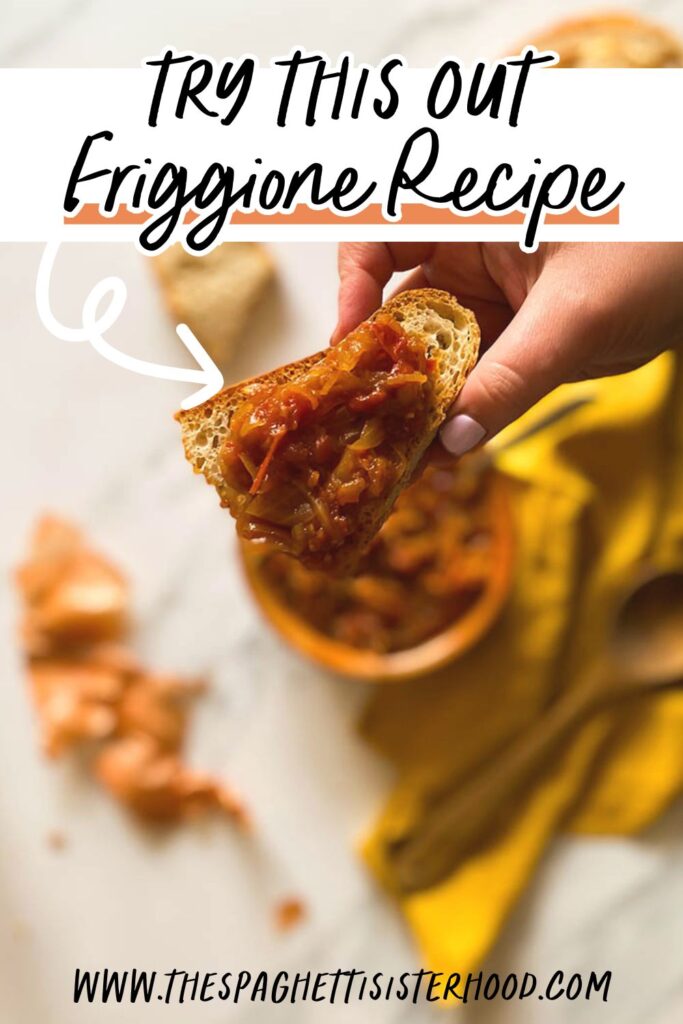
Friggione, The Delicious Onion Dish From Bologna
This post for the friggione onion sauce recipe was initially published on the 3rd of April, 2024.
In the heart of Italy’s culinary landscape lies a dish that embodies the essence of comfort food: Friggione. Hailing from the Emilia-Romagna region, particularly celebrated in the gastronomic haven of Bologna, Friggione is a humble yet incredibly flavourful dish that warms the soul with every bite. Today, let’s take a culinary journey into the rustic kitchens of Italy and explore the delightful flavours of Friggione, along with a simple recipe to recreate this traditional dish in your own home.
You know we’ve been trying to explore Italy through food and if there is one thing we know is that Emilia Romagna is the place to go. Especially if you’re a food lover! You’ll find below, but so many great dishes including Friggione are part of a huge food-oriented culture which is intertwined thoroughly across every single aspect of life.
You might have tried already – or read about it at the very least! – some other dishes from this region, including:
- this beautiful gnocco fritto, filled with meats and cheese which you can serve with some brilliant wine too;
- these iconic tiny but mighty tigelle, which are oh so delicious filled with savoury and sweet stuff;
- this Christmas dish you can’t miss out on, the scrumptious panpepato which is packed with nuts and fruit.
So let’s go ahead and discover all the secrets about friggione and its recipe.
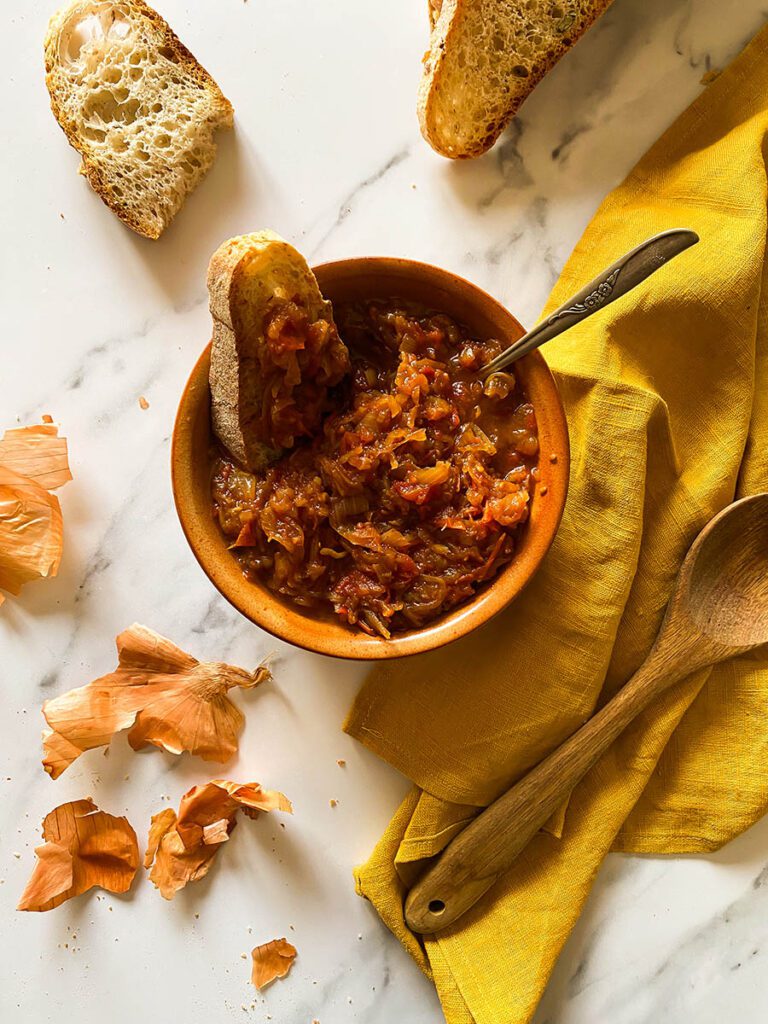
It’s time to hit that friggione recipe we’ve been promising you
Friggione’s roots trace back to the rustic kitchens of Emilia Romagna, where resourceful cooks transformed humble ingredients into dishes bursting with flavour. At its core, Friggione is a tomato-based sauce infused with the sweetness of caramelized onions and the subtle heat of peppers, creating a harmonious symphony of flavours that sings of home-cooked goodness.
When was friggione invented?
Friggione, or known in dialect as ‘frizan’ is a humble dish made of stewed onions and tomato sauce that Maria Manfredi Baschieri invented. The first written recipe of friggione dates back to 1886, which was then deposited into Camera di Commercio di Bologna, where it became a symbol of Bologna’s flavours and tradition.
While of humble origin and simple ingredients, this italian cuisine dish is served in restaurants to the day, thanks to its versatility and delicious flavor profile.
So tell me everything about Emilia Romagna, where friggione is from, and the food scene
Emilia Romagna, often referred to as the Food Valley of Italy, is a culinary paradise that boasts a rich tapestry of flavours, ingredients, and traditional dishes. Located in the northern part of Italy, this region is renowned for its fertile plains, which yield some of the finest produce, meats, and dairy products in the country. From the iconic Parmigiano Reggiano cheese to the world-famous balsamic vinegar of Modena, Emilia-Romagna offers a gastronomic journey like no other. Let’s delve into the extensive array of foods you can find in this culinary haven:
- Parmigiano Reggiano: Widely hailed as the King of Cheeses, Parmigiano Reggiano is a true culinary treasure of Emilia Romagna. Made from cow’s milk and aged for a minimum of 12 months (and often much longer), this hard cheese boasts a nutty flavour and crumbly texture. Parmigiano Reggiano is not just a cheese; it’s a symbol of tradition and craftsmanship, meticulously produced in the region’s dairy farms;
- Prosciutto di Parma: Another culinary gem from Emilia-Romagna, Prosciutto di Parma is a dry-cured ham that has been produced in the Parma region for centuries. Made from the hind legs of specially bred pigs, this delicate and savoury ham undergoes a lengthy curing process, resulting in a melt-in-your-mouth texture and a sweet, delicate flavour. Sliced thinly and served with fresh bread or paired with fruits such as melon, Prosciutto di Parma is a true delicacy;
- Balsamic Vinegar of Modena: Emilia Romagna is home to one of the world’s most prized condiments: balsamic vinegar. Made from the must of Trebbiano and Lambrusco grapes, aged in wooden barrels for years, and meticulously crafted according to traditional methods, balsamic vinegar of Modena is a complex and versatile ingredient. Its rich, syrupy texture and sweet-tangy flavour make it a perfect accompaniment to salads, meats, cheeses, and even desserts;
- Tortellini: Emilia Romagna is synonymous with fresh, handmade pasta, and tortellini is one of its most iconic varieties. These small, ring-shaped pasta parcels are traditionally filled with a mixture of meats, such as prosciutto, mortadella, and Parmigiano Reggiano cheese, then served in a flavorful broth or with a rich sauce. Making tortellini is considered an art form in the region, with each delicate piece crafted by skilled hands;
- Lasagne: No culinary journey through Emilia Romagna would be complete without sampling its legendary lasagne. Layered with fresh pasta sheets, rich meat ragù, creamy béchamel sauce, and a generous sprinkling of Parmigiano Reggiano cheese, lasagne embodies the region’s love for hearty, comforting dishes. Every bite is a symphony of flavours and textures, showcasing the depth of Emilia Romagna’s culinary heritage;
- Piadina Romagnola: A staple of Romagna cuisine, piadina is a simple yet delicious flatbread made from flour, water, salt, and lard, cooked on a griddle until golden and crispy. Traditionally served with a variety of fillings, such as prosciutto, cheese, arugula, and fresh tomatoes, piadina is a beloved street food that captures the essence of Emilia Romagna’s culinary traditions;
- Lambrusco Wine: To accompany these delectable dishes, look no further than Lambrusco wine, a sparkling red wine native to Emilia Romagna. Made from the Lambrusco grape variety, this refreshing and lightly effervescent wine pairs perfectly with the region’s rich and flavorful cuisine. Whether enjoyed as an aperitif or alongside a hearty meal, Lambrusco is the quintessential beverage of Emilia Romagna.
Emilia Romagna is a land where food is not just sustenance but a way of life. From its world-renowned cheeses and cured meats to its exquisite pasta and wines, the region’s culinary offerings are as diverse as they are delicious. Whether you’re strolling through bustling food markets, dining in cosy trattorias, or savouring a picnic in the countryside, every meal in Emilia-Romagna is a celebration of tradition, quality, and passion. So, come hungry and prepare to indulge in the flavours of Italy’s Food Valley.


What ingredients do I need to make friggione?
This friggione is easy to whip up, maybe the wait and cook time is a little longer than usual, but it’s mostly hands-off so it’s practically very easy. Let’s explore then the main ingredients for the friggione in detail and how they contribute to the deliciousness of it.
- White Onions: White onions are a fundamental ingredient in Friggione, lending their sweet and savoury flavour to the sauce. When cooked slowly over low heat, white onions develop a rich caramelized sweetness that forms the foundation of the sauce. The onions add depth and complexity to the dish, balancing the acidity of the tomatoes and enhancing the overall flavour profile;
- Pomodori Pelati (Peeled Tomatoes): Pomodori pelati, or peeled tomatoes, are the star ingredient of Friggione, providing its vibrant colour and robust tomato flavour. Using peeled chopped tomatoes ensures a smooth and consistent texture to the sauce, as the skins have been removed. Ripe and flavorful tomatoes are preferred for Friggione, as they contribute to the sauce’s rich taste and aroma;
- Lard: Lard is a traditional fat used in Italian cooking, prized for its ability to impart a rich, savoury flavour to dishes. In Friggione, lard is often used to sauté the onions and tomatoes, adding a decadent richness to the sauce. While olive oil can be used as a substitute, lard adds a distinct flavour and richness that enhances the overall taste of the dish;
- Salt: Salt is a crucial seasoning in Friggione, helping to enhance the natural flavours of the ingredients and balance the acidity of the tomatoes. Adding salt to taste as the sauce simmers allows for precise seasoning, ensuring a well-balanced and flavorful dish. It’s important to use salt judiciously, tasting the sauce as it cooks and adjusting the seasoning as needed to achieve the desired flavour profile;
- Sugar: Sugar is sometimes added to Friggione to balance the acidity of the tomatoes and enhance their natural sweetness. A small amount of sugar can help to mellow out any tartness in the sauce and create a more harmonious flavour profile. The addition of sugar is optional and can be adjusted according to personal preference and the sweetness of the tomatoes used.
How do I make friggione?
Making friggione is extremely easy, though it can be a little time-consuming during preparation and cooking. But it’s most definitely worth the wait, as the total effort is low, unless you count the onion slicing. But one step at a time, let’s see how to make friggione together.
You’ll start by slicing the white onions thinly using a mandoline or a knife, then put them in a large bowl with the salt and sugar and combine. This process will help the onions release their juice which will be useful when cooking. Let the onions sit in the bowl for at least two hours. Once the onions have released all their juice, melt the lard in a big pot, then add the onions together with their own liquid and cook for about 30 minutes.
Mix them every so often so that the finely chopped onions can get golden and soft and won’t stick to the pot. You can add a bit of cold water if the onions are starting to get stuck to the pot, just enough to get them from doing so.
After 30 minutes, you can add the peeled tomatoes and let everything cook for a further 1 hour on low with the lid on, stirring occasionally just like before. Just like before, you can also add some water to keep the sauce runny and not disappear fully.
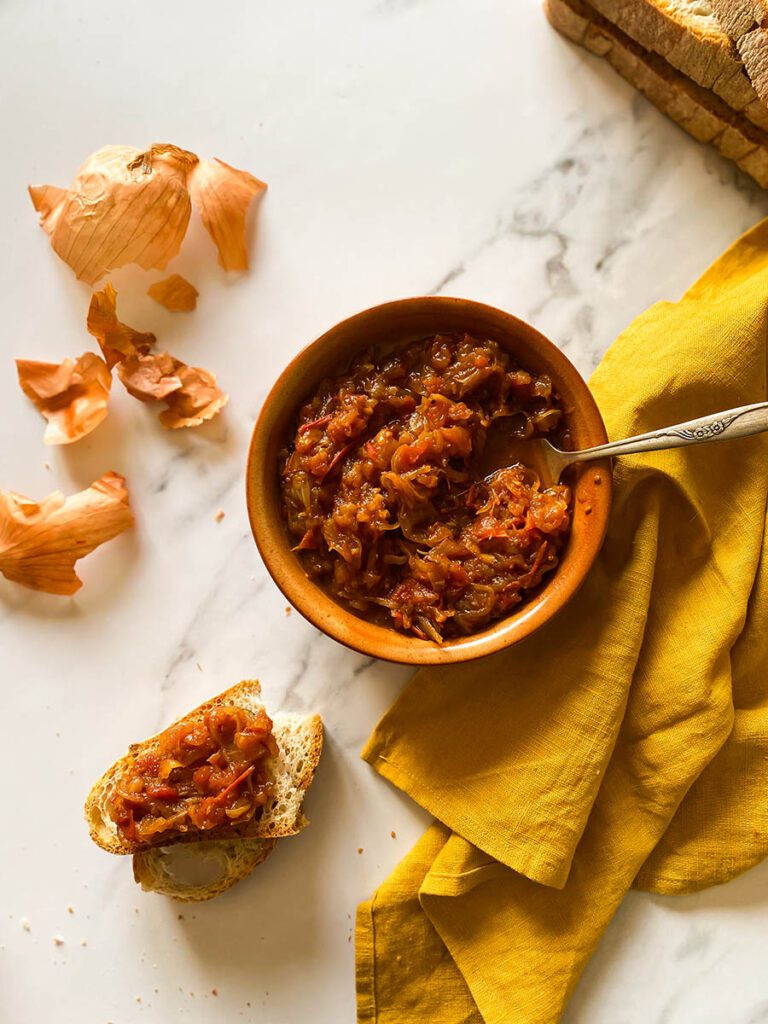
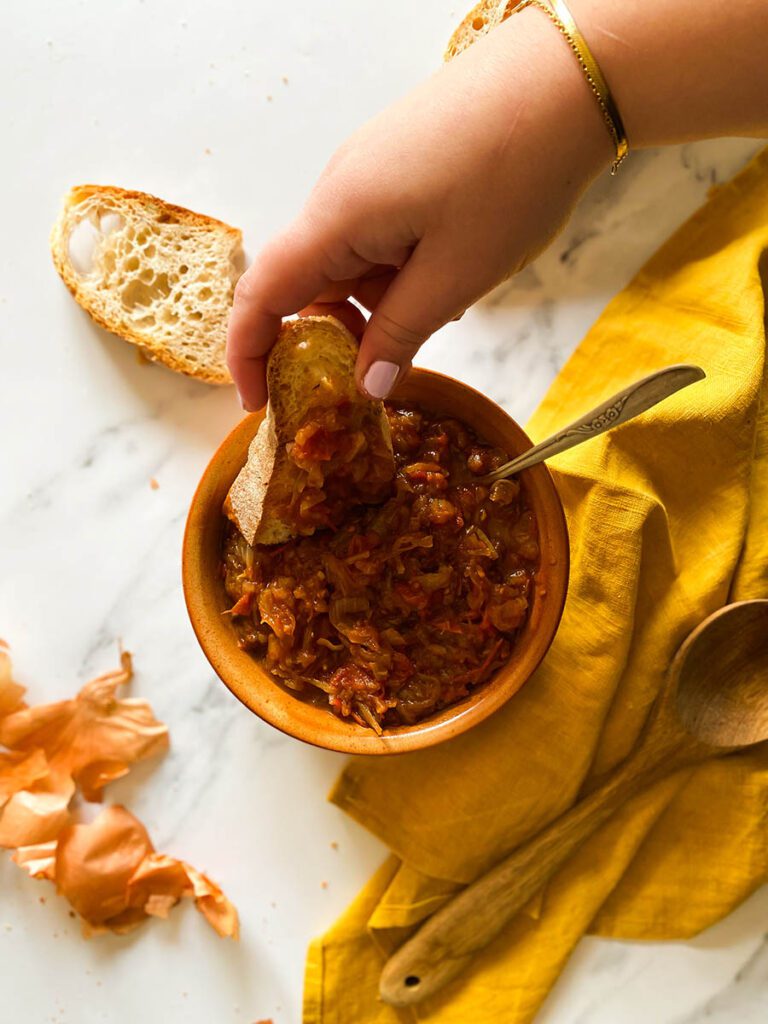
Friggione can be enjoyed hot or cold with plenty of fresh bread, sliced as is or toasted. And of course, wash it down with plenty of wine, possibly red like Chianti, Sangiovese or Lambrusco.
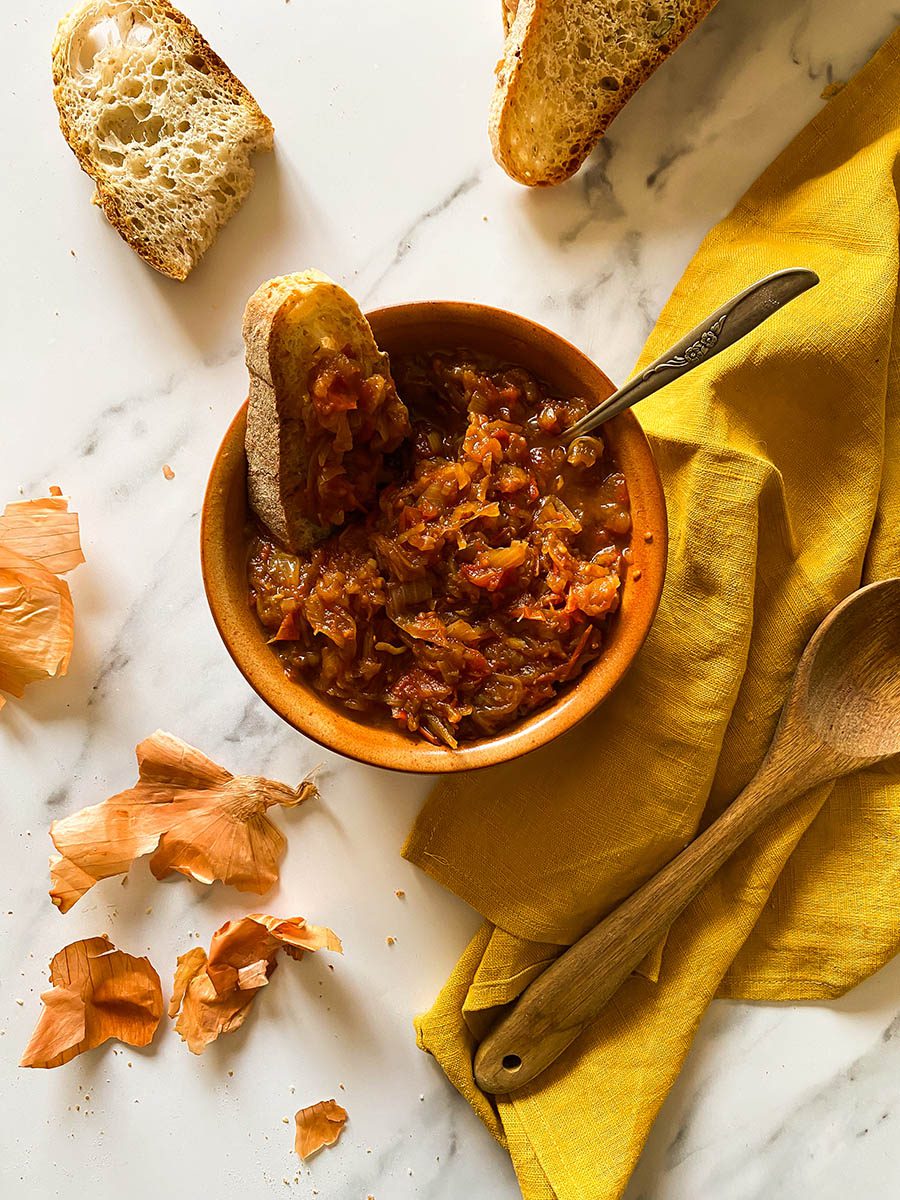
Friggione Recipe
Ingredients
- 500 g white onions
- 100 g peeled tin tomatoes
- 15 g lard
- 5 g salt
- 5 g sugar
Instructions
- You’ll start by slicing the white onions thinly using a mandoline or a knife, then put them in a bowl with the salt and sugar and combine. This process will help the onions release their juice which will be useful when cooking.
- Let the onions sit in the bowl for at least two hours.
- Once the onions have released all their juice, melt the lard in a big pot, then add the onions together with their own liquid and cook for about 30 minutes.
- Mix them every so often so that the onions can get golden and soft and won’t stick to the pot. You can add a bit of water if the onions are starting to get stuck to the pot, just enough to get them to not do so.
- After 30 minutes you can add the peeled tomatoes and let everything cook for a further 1 hour on low with the lid on, mixing every so often just like before. Just like before, you can also add some water to keep the sauce runny and not disappear fully.

Shop the friggione recipe post

In a world filled with culinary complexities, sometimes it’s the simplest dishes that resonate the most deeply when it comes to recipes that are replicated. Friggione bolognese, just like bolognese sauce, is a testament to the beauty of traditional italian home cooking, where humble ingredients are transformed into dishes that warm the heart and nourish the soul. So, gather your ingredients, channel your inner Italian nonna, and embrace the comfort of Friggione in your own kitchen.
Pin the friggione recipe for later!