


Meet Tigelle, The Delicious Italian Street Food
Today, we are taking a little trip to Emilia Romagna and we will be savouring the joyful and extremely delicious world of Italian street food, beginning with Tigelle. Admittedly, when it comes to Italian street food, the mind often conjures up images of sizzling pizza, mouthwatering gelato, or savoury arancini.
But tucked away in the heart of Emilia Romagna, a region celebrated for its culinary treasures, lies a lesser-known gem: Tigelle. These small, round flatbreads, crispy on the outside and tender on the inside, have been a beloved staple of Emilian street food for generations. Filled with all the meats and cheese your mind (and stomach) can even think of, these tiny flatbreads are what dreams are made of. Simple, delicious and you definitely won’t be stopping at one, I can tell you that – been there, done that.
In this blog post, we’ll journey through the history of Tigelle, discover the secrets of crafting these delightful treats and explore the rich culinary traditions of Emilia Romagna. Because food should be a travel experience, and you know it better than we do: food travel is the best kind of travel.

The Origins of Tigelle in Emilia-Romagna
To truly appreciate the allure of Tigelle, it’s important to understand the historical and cultural context from which they emerged. Emilia Romagna, a region nestled in northern Italy, is renowned not only for its picturesque landscapes but also for its gastronomic excellence. It’s often affectionately referred to as Italy’s Food Valley and for a good reason.
Emilia Romagna is one of Italy’s most captivating and diverse regions, known for its rich history, stunning landscapes, and world-class cuisine. It stretches from the Apennine Mountains to the Adriatic Sea, offering a remarkable blend of natural beauty and cultural treasures. Let’s delve deeper into the key aspects of Emilia Romagna:
- Culinary Excellence: Emilia Romagna is often referred to as the Food Valley of Italy, and for good reason. The region is renowned for its exceptional culinary heritage, producing some of the world’s finest ingredients and dishes. Parmigiano Reggiano cheese, Prosciutto di Parma, balsamic vinegar, and fresh pasta, including tagliatelle and tortellini, all hail from this region. Its capital, Bologna, is famous for its rich and savoury ragù sauce, which we will be able to share at some point and for now, you can enjoy a similar version with the Nduja ragu;
- Wine and Spirits: Emilia Romagna is home to a variety of excellent wines. Lambrusco, a sparkling red wine, is a regional favourite that pairs wonderfully with the local cuisine. Pignoletto and Sangiovese are other popular wine varieties produced here. Additionally, the region produces a range of spirits, including traditional Italian liqueurs like Limoncello;
- Historical and Cultural Sites: Emilia Romagna boasts a wealth of historical and cultural landmarks. Ravenna, one of its cities, is famous for its exquisite Byzantine mosaics, while Bologna boasts well-preserved medieval architecture and one of the world’s oldest universities. The region is also home to vibrant festivals, such as the Palio di Ferrara and the International Biennial of Ceramics;
- Natural Beauty: The landscape of Emilia Romagna is remarkably diverse. The Apennine Mountains offer opportunities for hiking, skiing, and outdoor adventures. The region also has a beautiful coastline along the Adriatic Sea, with sandy beaches and charming seaside towns like Rimini and Cervia. The Po River Delta, a UNESCO World Heritage Site, is an important wetland area rich in biodiversity;
- Art and Culture: Emilia Romagna has been a hub of artistic and cultural innovation for centuries. It’s the birthplace of luminaries such as Giorgio Morandi and Luciano Pavarotti. The region is also home to numerous museums and art collections, including the Pinacoteca Nazionale in Bologna;
- Automotive Excellence: Car enthusiasts will appreciate Emilia Romagna’s role in Italy’s automotive industry. The region is home to some of the world’s most prestigious car manufacturers, including Ferrari, Lamborghini, Maserati, and Ducati. Enthusiasts can visit museums and factories dedicated to these iconic brands;
- Renaissance Cities: Apart from Bologna, other cities in Emilia Romagna such as Ferrara, Parma, and Modena are steeped in Renaissance history and architecture. They offer a glimpse into Italy’s rich cultural past with well-preserved palaces, churches, and town squares.
But back to our main interest for this post. Tigelle, sometimes known as “Crescentine,” boasts an origin as rich and storied as the region it hails from. These delightful bread discs have been a fixture in Emilia Romagna’s culinary repertoire for centuries. Their story is one of humble beginnings, born out of necessity, and steeped in the flavors of the region.
The exact birthplace of Tigelle is a subject of culinary folklore, with various towns in Emilia Romagna claiming to be the cradle of this delightful street food. Nevertheless, their origin is rooted in the need for a simple, filling and portable food that could sustain hardworking locals as they toiled in the fertile plains of the region. Thus, Tigelle was born, a practical and satisfying snack that could be prepared easily in the field.
The name Tigelle is believed to derive from the traditional cast-iron skillet called a tigelliera, used to cook these bread rounds. This name serves as a reminder of the tool’s crucial role in the creation of this beloved street food.
The Ingredients You need to know from Emilia Romagna
Before we delve into the step-by-step recipe for Tigelle, let’s take a moment to appreciate the flavours and ingredients that make Emilia Romagna’s cuisine so special. This region is famous for its high-quality products, including Parmigiano Reggiano cheese, balsamic vinegar, and Prosciutto di Parma. These ingredients often find their way into Tigelle and other traditional dishes, adding layers of depth and complexity to the flavours.
Emilia Romagna is also the birthplace of pasta classics like lasagna and tagliatelle, which are often served with rich ragù sauces. The region’s fertile plains produce some of the best tomatoes, which are transformed into exquisite tomato sauces. With this culinary heritage, it’s no wonder that Tigelle is bursting with flavour and cultural significance.
Emilia Romagna’s culinary landscape is a treasure trove of exceptional ingredients and flavours that find their way into Tigelle. As we explore the Tigelle recipe, it’s impossible to ignore the influence of these regional ingredients:
- Extra Virgin Olive Oil: A key ingredient in Tigelle dough, extra virgin olive oil imparts a delightful richness to the bread’s flavour;
- Emilia Romagna’s Cold Cuts: The region is renowned for its cured meats, and you’ll often find Tigelle paired with an array of delicious cold cuts like Prosciutto di Parma or Mortadella;
- Parmigiano Reggiano Cheese: This King of Cheese hails from Emilia Romagna and frequently graces Tigelle as a topping, adding a savoury, nutty note;
- Balsamic Vinegar: Although not a direct component of Tigelle, the region’s famous balsamic vinegar can be drizzled on top for a delightful flavour contrast;
- Tomato Sauce: Many enjoy Tigelle with a drizzle of tomato sauce, which is made from the region’s bountiful tomato harvest;
- Lambrusco: A sparkling red wine native to Emilia Romagna, Lambrusco pairs perfectly with Tigelle, creating a harmonious symphony of flavours.


Cooking Tigelle: A Step-by-Step Guide
Now that we’ve explored the history and ingredients, let’s roll up our sleeves and embark on the journey of making Tigelle at home.
What ingredients do I need to make these Tigelle?
Let’s see what ingredients we will need to make this tigelle and I can tell you for a fact that most of these will be already in your home!
- Flour: Flour is the primary ingredient in Tigelle and forms the foundation of the dough. In this recipe, all-purpose flour is typically used, but you can also find variations that incorporate whole wheat flour or other types of flour for a different texture and flavour. Flour provides the structure and texture to the bread, allowing it to rise and become soft on the inside while developing a slightly crisp crust when cooked;
- Lard: Lard is a traditional fat used in the preparation of Tigelle dough. It contributes to the flavour, tenderness and moisture of the bread. Lard has been a common ingredient in many Italian recipes for generations, and its use in Tigelle adds a distinct richness to the final product. However, if you prefer a vegetarian or healthier option, you can substitute lard with olive oil or other fats, though the flavour profile may differ;
- Fresh Brewer’s Yeast: Brewer’s yeast, a living microorganism, is a crucial ingredient in bread-making. It serves as the leavening agent that causes the dough to rise, creating the characteristic fluffy texture of Tigelle. Fresh brewer’s yeast is often preferred in traditional recipes for its effectiveness in fermentation. It interacts with the sugar and warm liquid to produce carbon dioxide gas, which causes the dough to expand and become airy;
- Milk: Milk is another liquid component in Tigelle dough. It adds moisture and a mild sweetness to the bread. The combination of milk, water, and sometimes sparkling water creates a balanced hydration level in the dough, helping it rise properly and ensuring the bread’s interior remains tender;
- Sugar: Sugar is a source of food for the yeast. It encourages the yeast to become active and ferment the dough, producing the necessary carbon dioxide gas that causes the dough to rise. In addition to its role in fermentation, sugar also contributes a subtle sweetness to the Tigelle’s flavour;
- Sparkling Water: Sparkling water, or carbonated water, is a unique element in Tigelle dough. It adds lightness to the bread’s texture due to the bubbles present in the water. These bubbles expand when exposed to heat, helping the dough rise and become fluffy during cooking. Sparkling water is a key factor in achieving the characteristic puffiness of Tigelle;
- Salt: Salt is not only a flavour enhancer but also a vital ingredient in bread-making. It regulates yeast activity and strengthens the dough structure. Additionally, salt enhances the overall taste of Tigelle by balancing the sweetness from the sugar and milk.
How do I make the tigelle?
While it might seem like a daunting task, tigelle is actually very simple to put together and cook. The tigelle cook on a very special pan called tigelliera, but a cast iron or normal pan will do the trick anyway. So let’s see together how we can make them now.
- Activate the Yeast: In a small bowl, combine some warm water, sugar, and fresh yeast. Allow it to sit for about 10 minutes until it becomes frothy, indicating that the yeast is active.
- Mix the Dry Ingredients: In a large mixing bowl, combine the flour and salt.
- Combine Wet and Dry Ingredients: Create a well in the centre of the dry ingredients and pour in the yeast mixture, milk and sparkling water. Mix until a dough forms. Once the dough has come together, add the lard and knead.
- Knead the Dough: Turn the dough out onto a floured work surface and knead it for about 5 minutes until it becomes smooth and elastic.
- Rest the Dough: Place the dough in a lightly oiled bowl, cover it with a kitchen towel, and let it rest for about an hour, allowing it to double in size.
- Divide and Shape: After the dough has risen, divide it into 20 equal portions. Roll each portion into a ball and then flatten it into a disc about 1/4 inch thick. Let them rest and rise for a further 30 minutes.
- Cooking on a Cast Iron Skillet: Preheat a cast iron skillet or a traditional tigelliera over medium-high heat. Place the Tigelle on the skillet and cook for 2-3 minutes on each side, or until they develop golden-brown spots and puff up slightly.
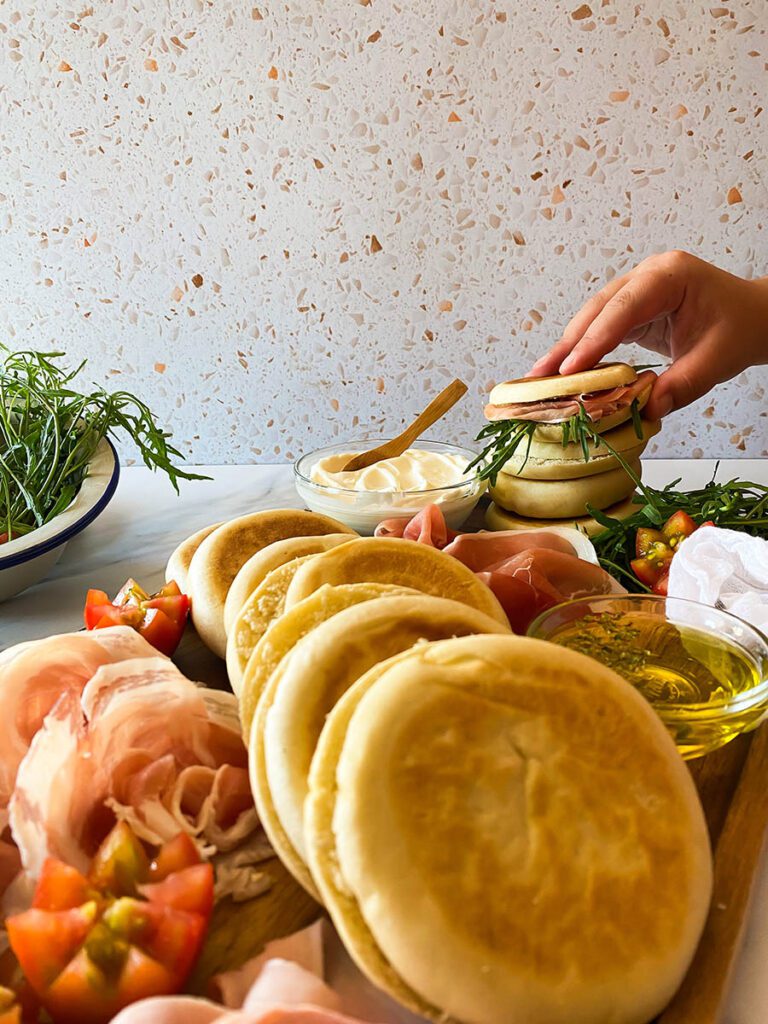
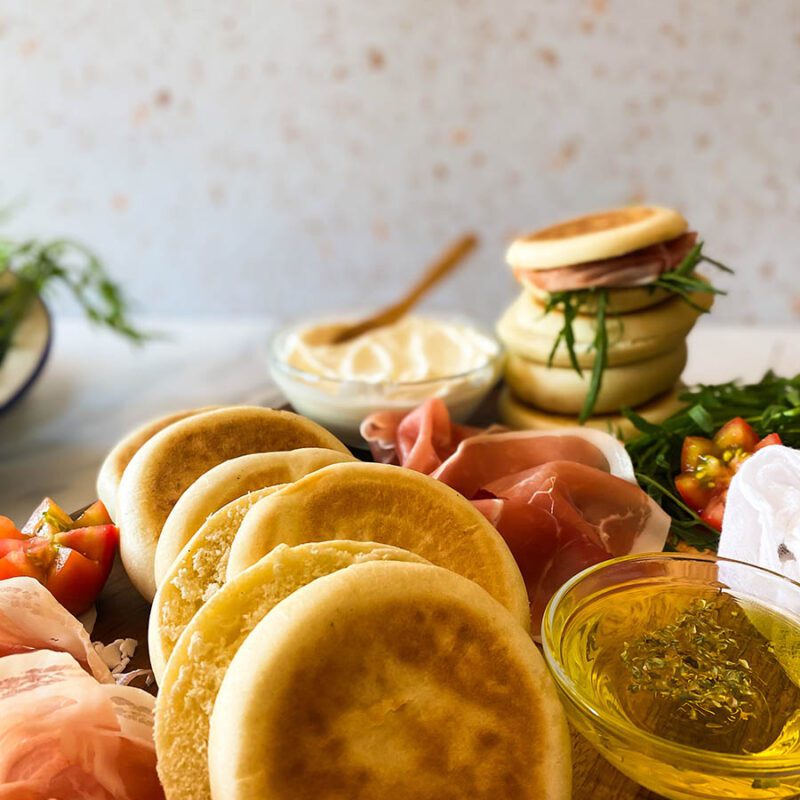
- Serve and Enjoy: Once cooked, remove the Tigelle from the skillet and let them cool slightly. Slice them in half horizontally and fill them with your choice of cold cuts, cheese, rocket leaves, and a drizzle of tomato sauce. Don’t forget to pair them with a glass of Lambrusco for the authentic Emilian experience!
Tigelle Recipe
Ingredients
- 500 g flour
- 45 g lard
- 6 g fresh brewer’s yeast
- 200 g milk
- 15 g sugar
- 110 ml sparkling water
- 8 g salt
Instructions
- Activate the Yeast: In a small bowl, combine some warm water, sugar, and fresh yeast. Allow it to sit for about 10 minutes until it becomes frothy, indicating that the yeast is active.
- Mix the Dry Ingredients: In a large mixing bowl, combine the flour and salt.
- Combine Wet and Dry Ingredients: Create a well in the centre of the dry ingredients and pour in the yeast mixture, milk and sparkling water. Mix until a dough forms. Once the dough has come together, add the lard and knead.
- Knead the Dough: Turn the dough out onto a floured work surface and knead it for about 5 minutes until it becomes smooth and elastic.
- Rest the Dough: Place the dough in a lightly oiled bowl, cover it with a kitchen towel, and let it rest for about an hour, allowing it to double in size.
- Divide and Shape: After the dough has risen, divide it into 20 equal portions. Roll each portion into a ball and then flatten it into a disc about 1/4 inch thick. Let them rest and rise for a further 30 minutes.
- Cooking on a Cast Iron Skillet: Preheat a cast iron skillet or a traditional tigelliera over medium-high heat. Place the Tigelle on the skillet and cook for 2-3 minutes on each side, or until they develop golden-brown spots and puff up slightly.
- Serve and Enjoy: Once cooked, remove the Tigelle from the skillet and let them cool slightly. Slice them in half horizontally and fill them with your choice of cold cuts, cheese, rocket leaves, and a drizzle of tomato sauce.
Shop the tigelle post

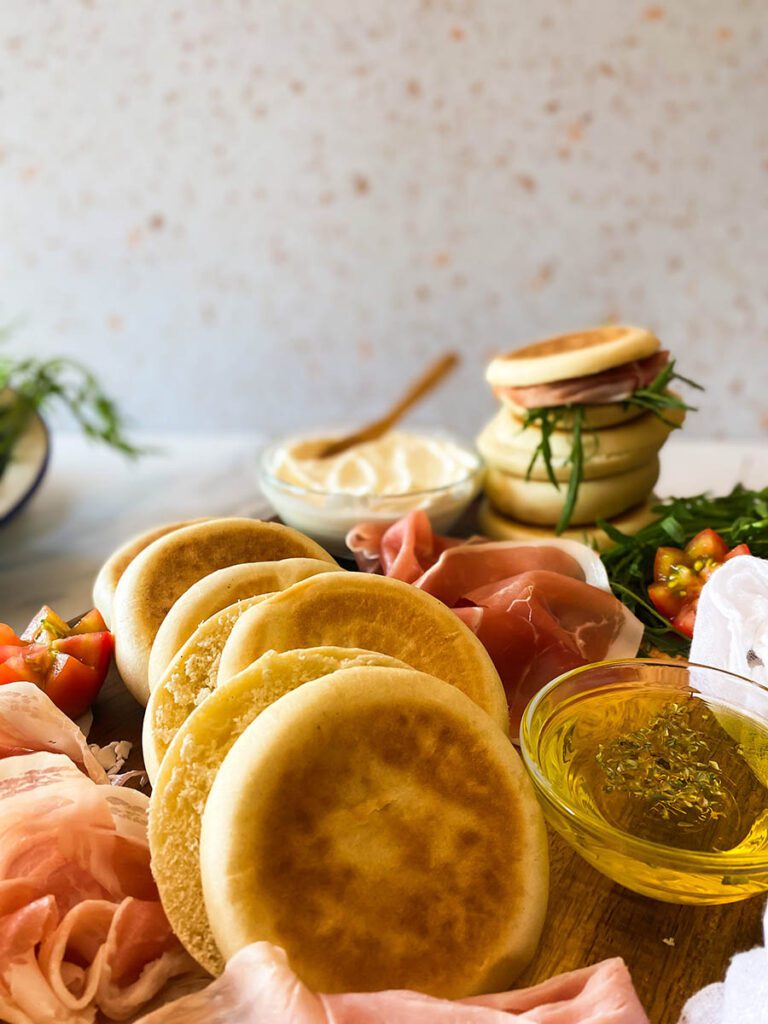

In the charming region of Emilia Romagna, Tigelle stand as a testament to the enduring tradition of Italian street food. These delectable bread rounds, crisped to perfection and filled with an array of savoury delights, offer a taste of history and culture that has evolved over centuries.
As you savour your homemade Tigelle, remember that you’re not just enjoying a simple snack; you’re indulging in a culinary journey through the picturesque landscapes and rich traditions of Emilia Romagna. So, whether you’re dining at a street vendor’s stall in Bologna or creating your own Tigelle in your kitchen, revel in the magic of this Italian street food that has delighted generations. Buon appetite!
Pin this recipe for tigelle for later!


