


Casatiello Recipe – A Delicious Neapolitan Easter Recipe
This casatiello Easter bread recipe was first published on March 27th 2023.
With Easter around the corner and plenty of dishes to discover, we thought we’d start with one which is very traditional and extremely tasty, Casatiello. Somehow, one of those dishes which you have seen around or heard of, but never attempted. And I am here to change that for you. Because neapolitan casatiello is made to be enjoyed, and you should try to make it at least once in your life. Or over and over again once you get the hang of it.
Because, seriously, it is just as good as it gets: savoury, soft and extremely tasty. And do you really need any further reasons, to be fair? Just know it’s a traditional Easter dish you can serve on Easter Sunday or Easter Monday as the Italians do.
Among the many Easter traditions, Italy holds a special place for food and also its religious meaning. Holidays are both a time for reflection and to spend with your family and eat delicious dishes and desserts after the lent.

What is Casatiello?
Casatiello is a traditional Italian Easter dish that has been enjoyed by generations of Italians. It is a savoury bread made with salami, cheese, and eggs, and it is typically served on Easter Sunday. It’s a unique Neapolitan Easter bread that has its own special story behind it. It was originally created to honour the dead during the Easter season and to celebrate the resurrection of Jesus Christ.
The ingredients used in this dish have plenty of significant meaning and are believed to bring good luck to those who eat it. And right now, I could definitely do with some of that! The dish before you is one that promises fortune and wealth – and it’s not just a myth. Loaded with powerful ingredients, this dish is said to bring prosperity and good fortune to those who partake in it. Eating it is a surefire way to bring luck and abundance into your life.
The rising dough meant the promise of new life; the shape of the bread symbolized a crown and the boiled eggs meant rebirth. The cured meats and cheese added… well, just a great addition I guess! With its delicious flavour, beautiful presentation, and deep cultural significance, Casatiello is a hard-to-forget meal that will bring joy to any Easter celebration!
I loved reading this post from NonnaBox.com and discovered so much extra information, so I recommend you check it out! She talks about all things ruoto that I had no idea about, and also about the history and it was such a great read!
Where did the casatiello easter bread come from?
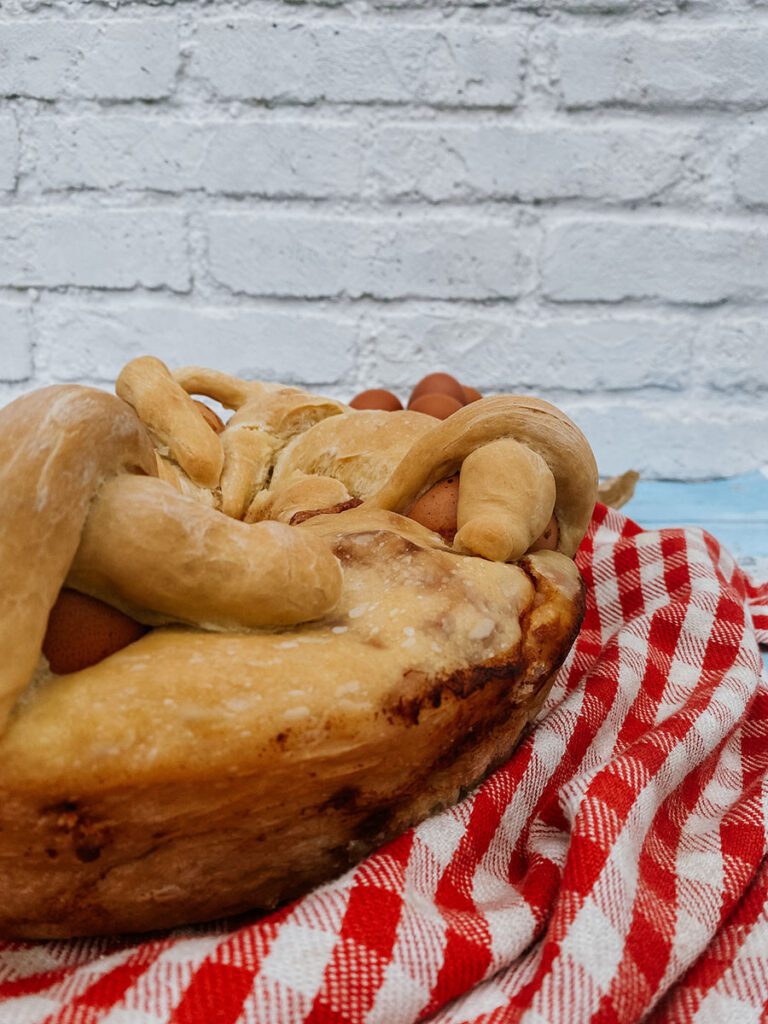
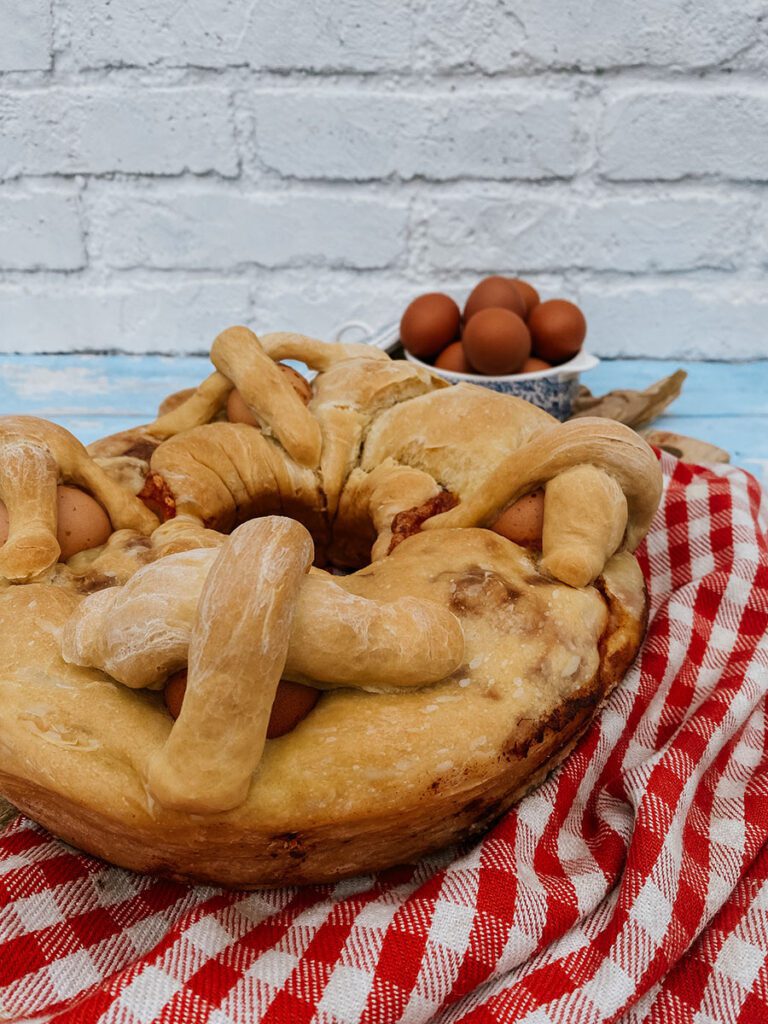
Casatiello Napoletano originated in Naples and has been popular for centuries. This stuffed Easter bread is made with a combination of flour, eggs, lard, cheese and salami and is usually shaped into a ring or loaf shape.
It has a unique flavour that comes from the combination of the ingredients and it can be topped with sesame seeds too, but we won’t do that this time. Casatiello has become a staple dish in many Italian households during Easter celebrations and continues to be enjoyed by many people around the world today.
You can serve this Neapolitan easter bread on Easter Sunday or, like the Italians would, on Easter Monday as you go out for a traditional scampagnata, the traditional activity for the day!
Unlocking the history of Casatiello napoletano
Casatiello is made with a variety of ingredients including pork fat, cheese, and eggs. Its history dates back centuries and has been passed down through generations of families. The recipe we have been given by a family friend is just one of those you’d pass down, and let me tell you, it’s just perfect.
The secrets behind this delicious savoury Neapolitan-stuffed bread are complex, but they can be unlocked by delving into the history and regional variations of casatiello. By exploring the unique ingredients used in different regions, we can gain a deeper understanding of how this dish evolved over time. We can also learn more about the cultural significance it holds for every Italian. But fear not, I will make it simple and quick!
The existence of casatiello, similarly to the one of pastiera, has been attested at least since the seventeenth century: the proof comes from the folk tale of La Gatta Cenerentola (“Cinderella the Cat”) published in 1634–1636 in the short story collection Pentamerone, ovvero Lo Cunto de li cunti by Giambattista Basile, a Neapolitan writer. The bread is mentioned as part of the food at the celebrations held by the king to find the girl with the lost slipper.
Later on, it’s also mentioned in the 19th century book Costumi e tradizioni di Napoli e dintorni – Customs and traditions of Naples and the surrounding area – by Francesco De Bourcard in 1858. The scholar described it was an Easter bread that was homemade for Easter lunch and offered to neighbours and the servants on the Easter holidays. (Wikipedia)

Does Italian casatiello hold a religious meaning?
It does indeed! Casatiello, particularly the savory version, holds religious significance in the context of Easter traditions in Italy. The inclusion of whole eggs in the bread carries symbolic meaning related to Christian beliefs:
- Easter Symbolism: Easter is a significant Christian celebration that commemorates the resurrection of Jesus Christ. Eggs are often used as symbols of new life, rebirth, and resurrection.
- End of Lenten Fasting: Casatiello is traditionally prepared and consumed during the Easter season, marking the end of the Lenten fasting period. This Easter bread is a way to break the fast and celebrate the holiday.
- Eggs as a Symbol of Resurrection: The whole eggs baked into the casatiello symbolize the resurrection of Jesus. The eggs are often arranged in the shape of a cross or placed strategically within the bread to represent the Christian belief in the resurrection.
- Renewal and Rebirth: The eggs embedded in the bread carry a symbolism of renewal, regeneration, and the promise of new life, echoing the central theme of Easter within Christian theology.
What ingredients do I need to make this casatiello neapolitan easter bread?
This Italian Easter bread is quite the preparation when it comes to the casatiello ingredients list, but fear not – it’s quite easy to prepare so get writing that shopping list!
To make casatiello dough you will need very few ingredients:
- Flour: You will need two different kinds of flour, Manitoba flour and 0 flour. These are both important for the structure of the Casatiello itself as they both contain high levels of gluten. You would be able to replace it with bread flour if you cannot get your hands on them, so you are still covered.
- Fresh Yeast: which you will activate with water;
- Water: you will need some warm water to activate the yeast and the rest to prepare your dough;
- Sunflower Oil: you can also use olive oil;
- Salt.
On the other hand, the filling requires a few more ingredients. It’s full to the brim with savoury filling that will only add to the dough and make it even more unforgettable. You will need:
- Cooked ham;
- Salami;
- Provola cheese: different recipes call for different cheeses. Scamorza is another cheese that is popular as an option;
- Provolone cheese;
- Grated parmesan: also pecorino cheese is widely used in this recipe too;
- Lard: which you will spread on top of the dough before you dd the cured meats and cheeses as well as on the bundt mould to bake the Easter bread. Lard is a must in this recipe as butter or margarine won’t work the same;
- Eggs: they are used whole and raw, at room temperature, they will then bake at the same time as the dough in the oven
How do I prepare the casatiello?
As I mentioned, preparing the Casatiello is no hard task. You will start by melting the yeast in a little lukewarm water you would have reserved from the total of the recipe. Do this straight in the bowl of your stand mixer so that you are ready to move on to the next step.
Attach the dough hook and add both the Manitoba flour, 0 flour, oil and salt. Combine it until everything is mixed, then start adding the water slowly. I have done it in a way that it’s not an all-in-one deal, but slowly so that I can make sure it takes all the ingredients together. Let it run until the dough it’s smooth, roughly 5 to 10 minutes, do not overwork it – it just doesn’t need it!
Now let the dough rise, covered with a cloth, until it doubles in size. This can take up to three hours, depending on how warm your house is. We are experiencing a nice bout of spring, so I let my bowl sit in the sun and it took a little over two hours, so check it often to avoid it being overgrown and a little sour! In the meantime, cut all your cured meats and cheese into small cubes and set aside, ready to fill your casatiello. Measure the lard as well ready to use once the dough it’s ready.
Once the bread dough has doubled in size, you can deflate it gently and make sure you reserve a small bit for the crosses on the eggs. It really needs to be a very small amount, as the crosses need to be small enough that they don’t end up covering the eggs fully.
Using some parchment paper on your work surface, spread out the dough using your hands. The more you stretch it, the more it will open up to house all the meats and cheese. Make sure it’s not too thin, but not too thick either – there is not a specific measurement here. Dust the black pepper on the dough, then press it with your hands. Now spread 70g of the lard, then cover it with the diced salami, ham and cheese. This was the fun part for me!
Difficult bit incoming, the rolling! Roll it using the parchment paper underneath, being careful not to rip it into pieces. Now use the other 30g of lard to brush the whole cylinder and place it in a tube pan covered in an extra 20g of lard, shaping it as a doughnut. This was not an easy task, and I had to ask for help to move the humongous cylinder, so you might want someone around too!
You can finally place the 4 eggs on top, then using the extra dough you can create 8 small stripes to cover the eggs to form a cross. Let the casatiello rise for a further 2 hours, covered in plastic wrap, then bake at 180°C for 1 hour or so, making sure it’s golden brown before you remove it from the oven. And that’s done! Let it cool before serving and just enjoy it.

Casatiello Stuffed Easter Bread
Ingredients
- 400 g Manitoba flour
- 200 g 0 flour
- 350 g water
- 1 tbsp sunflower oil
- 12.5 g fresh yeast
- 1 tsp salt
- 100 g lard + 20g extra for the mould
- 150 g cooked ham
- 200 g salami
- 100 g provola cheese
- 100 g provolone cheese
- 100 g grated cheese like parmesan
- black pepper
- 4 eggs
Instructions
- Start by melting the yeast in a little warm water you would have reserved from the total of the recipe.
- Add the water and yeast mixture to your standing mixer bowl, dough hook attached, where you will also add both the flours, oil and salt.
- Combine it until everything is mixed, then start adding the water slowly. Let it run until the dough it’s smooth, roughly 5 to 10 minutes.
- Let the dough rest, covered with a cloth, until it doubles in size – can take up to three hours.
- In the meantime, cut all your meats and cheese into small cubes and set aside, ready to fill your casatiello. Measure the lard as well ready to use once the dough it’s ready.
- Once the dough has doubled in size, deflate it gently and reserve a small bit for the crosses on the eggs.
- Using some parchment paper, spread out the dough using your hands. The more you stretch it, the more it will open up to house all the meats and cheese. Make sure it’s not too thin, but not too thick either – there is not a specific measurement here. Dust the pepper on the dough, then press it with your hands.
- Spread 70g of the lard, then cover it with the diced salami, ham and cheeses.
- Roll it using the parchment paper and use the other 30g of lard to brush the whole cylinder.
- Place it in a bundt pan covered in extra 20g of lard, shaping it as a donut. Place the 4 eggs on top, then using the extra dough create 8 small stripes to cover the eggs as to form a cross.
- Let the casatiello rise for a further 2 hours, covered in plastic wrap.
- Bake at 180°C for 1 hour or so, making sure it’s golden before you remove it from the oven.
- Let it cool before cutting through it and serve.
Are there any other types of casatiello?
Indeed, this casatiello Easter recipe is just one of the many versions you can find around the region and in Italy. As with most Italian food recipes, everyone has their own tips and tricks as well as a change in ingredients. There are many versions, but between the many you should try:
- Casatiello Napoletano: The traditional version from Naples, which includes a delicious rich mixed filling of cured meats like salami and prosciutto, cheese (such as provolone, scamorza or pecorino romano), and whole eggs. You will find then local versions of it like from Bari and Salerno, which will have a similar preparation and just a difference with some ingredients.
- Tortano: This version is very similar to the traditional one except for two things. The eggs, which are hard boiled and placed only in small pieces in the filling, as well as the use of charcuterie which in tortano is omitted.
- Sweet casatiello: Another popular version is casatiello dolce, this variation features a sweetened dough enriched with sugar and butter, filled with ingredients like dried fruits, candied peel, nuts, and sometimes sweet ricotta or custard. The bread is shaped into a round or oval form, and in some variations, whole eggs may be included, maintaining the Easter tradition.
- Modern Variations: Some people like to experiment with the filling, adding ingredients like sun-dried tomatoes, olives, or other flavorful additions to customize the bread to their taste.
This one was a great recipe indeed, so make sure you also check out this list of 15 epic Italian Easter desserts to try! And if you are after a dessert, check this heavenly torta paradiso, quick tiramisu recipe and biancomangiare recipe. If you want to check out another popular Italian Easter recipes, find more about Sicilian Easter bread here.
Hope you have found discovering this Easter traditional dish as interesting as we did! What is a traditional Easter dish in your country? Have you ever tried casatiello before? Would you like to try a classic savoury casatiello or would you be adventurous and try a sweet casatiello too?Let us know in the comments!


Shop the casatiello post

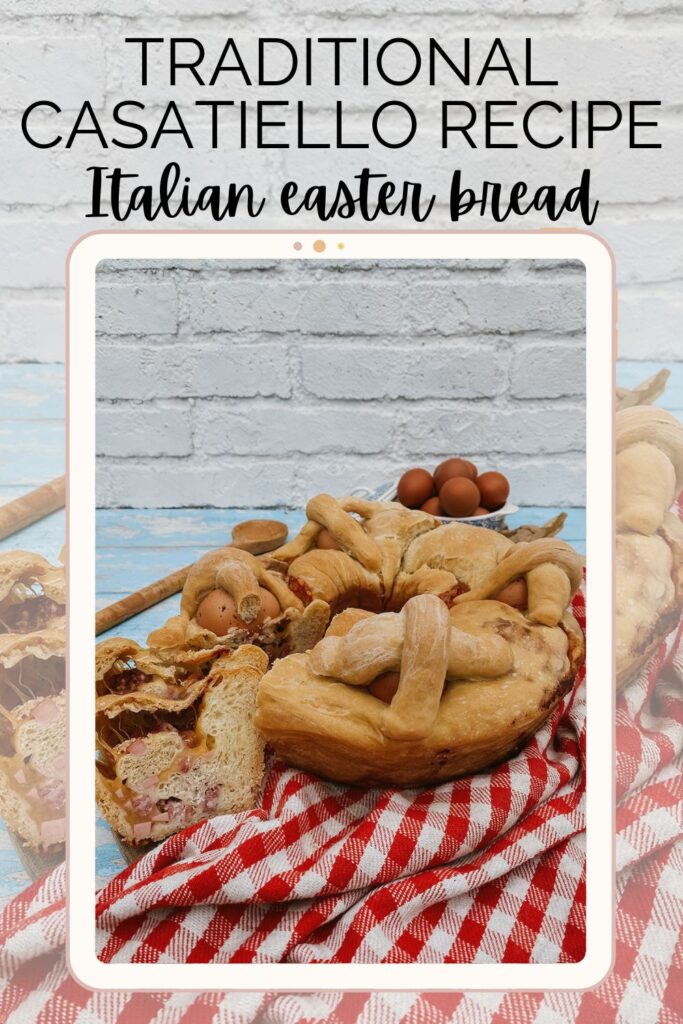
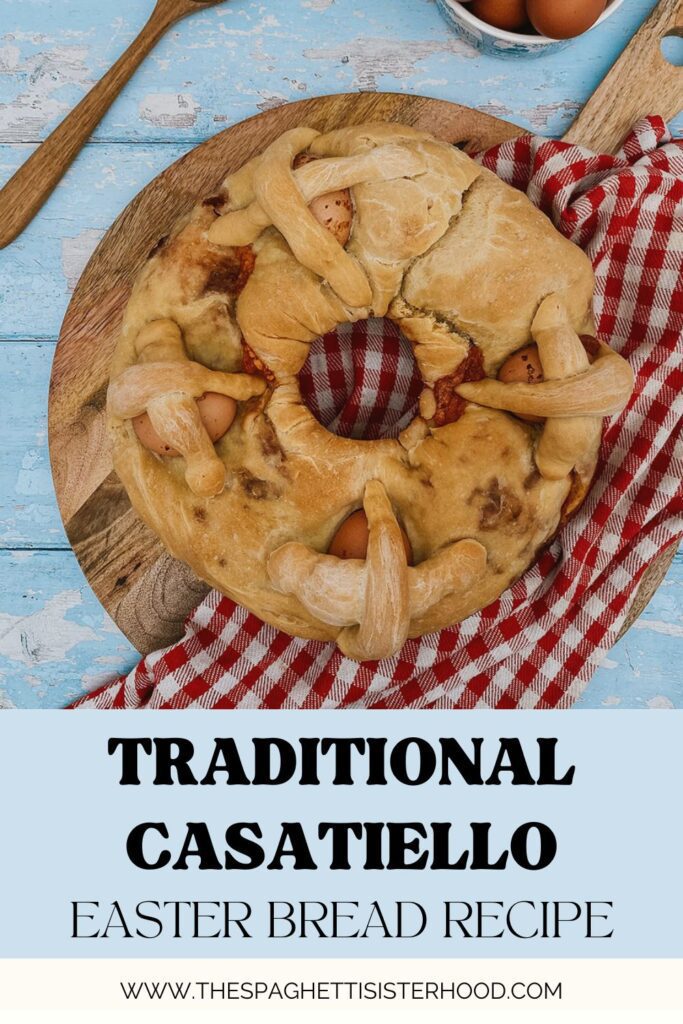
Pin this casatiello recipe for later!


This sounds insanely good! Hoping I get to try out this delicious recipe soon!
Thank you Lenny!
These looks really different but I love that about it. I might just have to give it a try.
Hope you enjoy Ramona x
This looks incredible and so intricate! I bet it takes some skill to make this 🙂
It’s actually easier than I thought – BUT SO DELICIOUS!
This looks absolutely amazing! I love dishes like this that have been around for centuries. You always know they will taste so good! I will definitely be trying out this recipe over Easter to add something new to our Easter traditions! xxx
Hope you enjoy Ashley x
This pie looks yummy-licious!!! I’m definitely going to try this recipe. Thank you for sharing.
Thank you Fadima x
Wow! This looks fantastic! This isn’t just baking; this is art!
You are too kind Chloe xx
This is an interesting recipe and looks so yummy. I would love to try it soon and I will save it.
Thank you Fransic x
This recipe sounds and looks amazing. Need to try and make it. Thank you for sharing.
Hope you enjoy it Charlotte x
That pie looks really delicious, I haven’t heard of it before. Thank you for sharing the easy to follow recipe.
Thank you for reading Lauren xx
This looks delicious!!
Thank you x