Beautiful Teste di Moro: Discovering the strange Mystery Behind these Ceramic Heads
This teste di moro post was first published on the 1st of February 2024.
There is something mystic and mysterious surrounding the Teste di Moro we’re about to talk about in this post today. In fact, nestled in the heart of Sicily, the island of Italy rich in history, art and cultural diversity, lies a fascinating and enigmatic tradition known as Teste di Moro or Moorish Heads. These unique ceramic sculptures have captured the attention of art enthusiasts and historians alike, not only for their aesthetic appeal but also for the intriguing stories that surround their origin and significance.
I discovered their fascinating story as I was researching some of those when I first saw them in a ceramic shop in Noto. And to say I fell madly in love with them would be an understatement. Of course, I got hooked on the origins and reasoning behind the colours and shapes, so I am going to take you on a trip to discover Teste di Moro with me now.

Let’s start with the history surrounding the myth of Teste di Moro
The history of Teste di Moro dates back to the Arab rule in Sicily during the 9th and 10th centuries. The Moors, as they were called, left an indelible mark on Sicilian culture and art. It is believed that these ceramic heads, depicting the faces of African or Middle Eastern men, were created as a tribute to the diverse influences that shaped Sicilian heritage.
The Teste di Moro depict a man and a woman, the main characters of a legend that has enchanted enthusiasts of Sicilian history and culture for almost a thousand years. The story of this couple is so deeply rooted in the tradition and folklore of Sicily that it is immediately recognizable worldwide. Several designers, stylists, and artists have extensively used it in their collections as a tribute to the island.
What about the legend, though?
The man and woman depicted by tradition share a tragic fate, but there are two different versions of their love story. What undeniably unites them is the overwhelming passion, of which every representation of the heads has become a symbol.
The legend tells of a young girl, who lived in the early 1100s AD, beautiful and devoted to caring for her plants on the balcony of her home in Palermo, in the Kalsa district. She fell madly in love with a Moorish soldier, also overwhelmed by passion for the beautiful lady.
According to one version of the legend, the girl discovered she was deceived by the soldier: he was actually married with children, ready to abandon her to return to his homeland one day. The discovery of this betrayal led the girl to kill her lover in his sleep, decapitate him, and use his head as a pot for basil, proudly displayed on the balcony. According to the tragic legend, the basil grew so lush that it aroused the envy of all the neighbors. They began commissioning artisans to create pots shaped like heads, which are now the current Moro heads – also called by some Teste dei Turchi – a symbol of passion and love that should not be betrayed.
According to another version of the legend, the two lovers were both killed and decapitated by the girl’s family, who disapproved of their love story, and their heads were displayed as a warning against illicit unions. From this story, the depiction of the Moro heads as a couple symbolizes a passion and love that transcends time.
Whichever version of this legend you decide to embrace, though, you can’t deny the love, passion and tragicity working their way through both. And that same passion is also something you can see and feel all the way through your Sicily trip.
What about the symbolism and meaning behind teste di moro?
The Teste di Moro carry deep symbolic meaning, reflecting the confluence of different cultures on the island. These sculptures often depict the faces of bearded men with intricate details, showcasing the skilled craftsmanship of Sicilian artisans. The dark colour of the ceramic testa for the man is said to represent the Moorish influence, while the beards symbolize wisdom and maturity.
Some interpretations suggest that the vase heads served a protective function, guarding homes and businesses from evil spirits or the evil eye, something Sicily is still very much attached to. Placed at the entrances of houses or on rooftops, these ceramic heads were believed to bring good luck and ward off negativity.
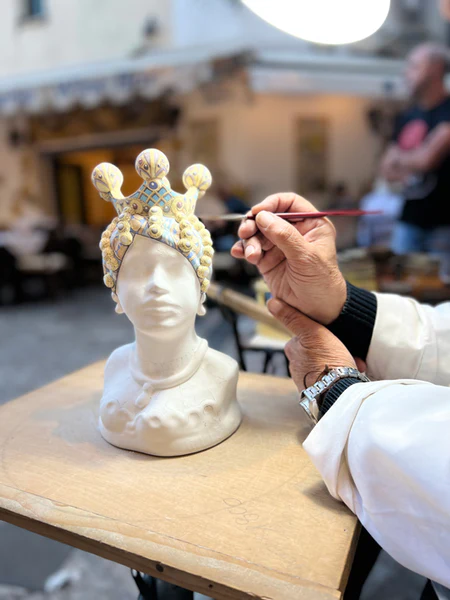
The magic of teste di moro and ceramic works nowadays
One cannot help but marvel at the artistic excellence displayed in the creation of Teste di Moro. Sicilian artisans, known for their mastery of ceramics, have skillfully crafted these heads, infusing them with a lifelike quality. The intricate facial features, expressive eyes, and carefully sculpted beards showcase the artisans’ dedication to their craft.
While Teste di Moro continue to be a cherished symbol of Sicilian heritage, contemporary artists have also embraced the tradition, offering modern interpretations of these iconic sculptures. Some artists experiment with different materials and colours, adding a contemporary flair to the traditional Teste di Moro. This fusion of old and new reflects the ongoing evolution of Sicilian culture and its ability to adapt while honouring its rich history.
But efforts are still underway to preserve and promote the tradition of Teste di Moro. Artisans and cultural organizations collaborate to ensure that this unique art form is passed down to future generations. Museums and galleries in Sicily showcase these ceramic heads, providing a platform for locals and visitors alike to appreciate their cultural significance.
Caltagirone it’s where the ceramic best is at. Caltagirone is a town renowned for its rich history, cultural heritage, and distinctive ceramics that have earned it the title of the City of Ceramics. It has a long-standing tradition of ceramic craftsmanship, dating back to ancient times. The town’s ceramics are highly regarded for their vibrant colors, intricate designs, and quality craftsmanship. Visitors can explore numerous workshops and stores where local artisans showcase their creations, ranging from decorative pieces to functional items.
Where can I Buy Teste di Moro?
The purchase of Teste di Moro can depend on your location and whether you prefer to buy them locally or online. Here are a few suggestions:
- Local Artisan Shops in Sicily: If you are in or around Sicily, particularly in towns known for ceramics such as Caltagirone, you can explore local artisan shops and markets. These places often offer a wide variety of ceramic products, including testa di moro;
- Ceramic Studios and Workshops: Consider visiting or contacting ceramic studios and workshops that specialize in traditional Sicilian ceramics. These establishments may have a selection of Moor’s Head items, and you may even get the chance to see artisans at work;
- Sicilian Markets and Festivals: Local markets and cultural festivals in Sicily frequently feature handmade ceramics. Check if any events or markets are showcasing traditional crafts, where you might find Teste di Moro for sale;
- Online Retailers: If you’re not in Sicily or prefer online shopping, various online retailers specialize in Sicilian ceramics. Websites that focus on Italian or Sicilian handicrafts may have a selection of Moor’s Head ceramics. Popular shopping platforms like Etsy might also feature these products;
- Specialty Stores or Importers: Look for specialty stores or importers that focus on Italian or Sicilian goods. These stores, whether physical or online, often curate a selection of authentic products from the region;
- Auction Websites and Marketplaces: Search online auction websites or marketplaces where individuals and businesses sell handmade or vintage items. Be sure to check the product descriptions and reviews to ensure authenticity and quality.
Remember to verify the credibility of the seller and the authenticity of the product, especially when buying online. Additionally, consider the shipping costs and delivery options if you are purchasing from a different region or country.
Some of our favourite shops in Italy include:
- Folk, Magda Masano: This lady has some beautiful handmade pieces that I have been dreaming about for years now, might get to visit her shop in Catania soon too;
- Ceramiche Maremoro: Some extremely pretty looking heads, I particularly love the coloured ones;
- Ceramiche di Caltagirone: Because we mentioned this city and their ceramics, some of their modern takes are beautifully done (but extremely expensive!);
- DD Ceramiche Siciliane: Some of the best-looking teste di moro I’ve seen around, some intricate designs you absolutely need to see!

In the quiet corners of Sicily, the Teste di Moro stand as silent witnesses to the island’s complex history and the diverse cultural influences that have shaped its identity. Beyond their aesthetic appeal, these ceramic heads tell a story of resilience, adaptability, and the enduring spirit of a people connected to their roots. As we marvel at the artistry of Teste di Moro, we are reminded of the importance of preserving and celebrating cultural traditions that enrich our understanding of the past.
Pin this Teste di moro post for later!